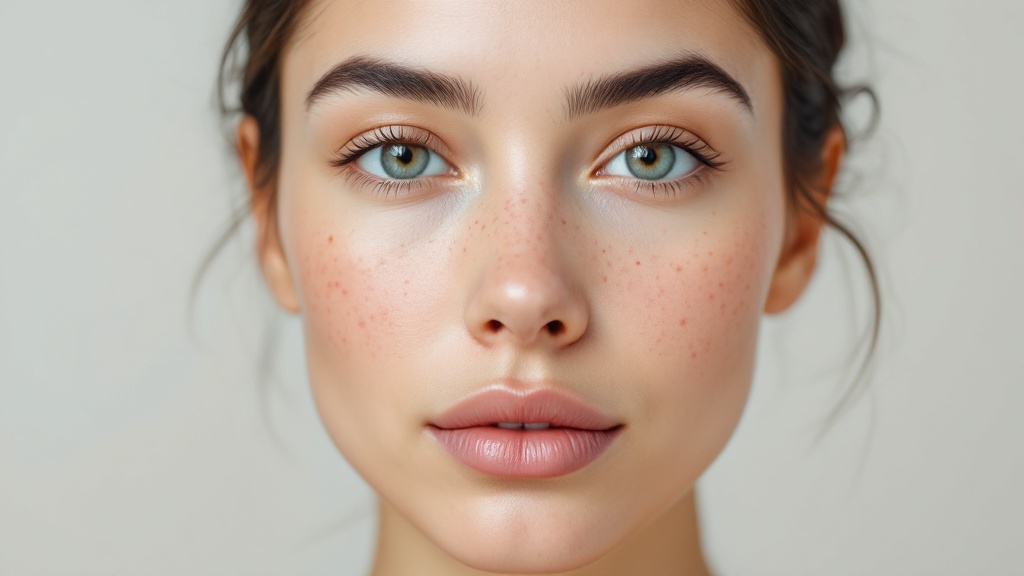
The appearance of dark spots on the face is a concern many people discover one day in their mirror. These pigmented marks are not all the same: they can be caused by the sun, hormones, or even skin inflammation, each requiring a different approach. In this article, we will explore the various causes of these spots, understand their formation process, and discover the best strategies to prevent them.

The Causes and Types of Dark Spots on the Face
The dark spots that appear on our face are the result of excessive melanin production, our skin’s natural pigment. This overproduction can be triggered by various external factors like sun or pollution, but also by hormonal changes or skin inflammation. We mainly distinguish three types of spots: solar lentigines, melasma, and post-inflammatory hyperpigmentation.
The Impact of the Sun and Solar Lentigines
Sun exposure is the main cause of facial spots. It alone accounts for nearly 90% of the age spots we observe. These brown marks, called solar lentigines, appear gradually over the years. They generally start to manifest around age forty, then become more numerous after 60.
Lentigines primarily form on the most exposed areas of our face. They generally measure between 5 and 10 millimeters and are particularly visible in people with fair skin. The process is simple: UV rays stimulate our melanocytes, which then produce too much melanin in certain areas. This overproduction accumulates and forms these characteristic spots.
This phenomenon is amplified by the oxidation of our cells due to free radicals. The sun is not the only culprit: air pollution also worsens this oxidation. People who spend a lot of time outdoors, such as gardeners or athletes, are particularly affected by the appearance of these spots.
Hormones and Melasma
Hormonal variations play a major role in the appearance of dark spots on the face. Melasma, also known as the mask of pregnancy, particularly affects pregnant women – nearly one in two is concerned. This hyperpigmentation is not exclusive to pregnancy: taking oral contraceptives or hormone therapy can also trigger it. The spots generally appear on three areas of the face: the center (forehead, nose, upper lip), the cheekbones, or the jawline. To limit their appearance, daily sun protection with an SPF 50+ is essential, even on cloudy days. It is also advisable to avoid sun exposure during the hottest hours of the day.
Post-Inflammatory Hyperpigmentation
Post-inflammatory hyperpigmentation occurs after skin inflammation. It’s a natural reaction that leaves colored marks where the skin has been irritated or injured. These spots often appear after acne or dermatitis has healed. Their color varies from red to brown, sometimes even bluish, and they can persist for several months, or even years.
People with darker skin are particularly susceptible. Although the sun is not the direct cause of these spots, it can make them more visible and persistent. To limit their appearance, a few simple steps are essential:
• Do not scratch pimples or irritated areas
• Protect your skin from the sun with a minimum SPF 30
• Promptly treat any skin inflammation
Several solutions can help reduce these spots, such as using products containing vitamin C, niacinamide, or gentle exfoliating acids. A dermatologist can advise you on the most suitable treatment for your skin type.
The Process of Dark Spot Formation
The formation of dark spots on the face is a complex biological process, but one that can be explained simply. It all begins in melanocytes, specialized cells located in our skin. These cells are responsible for producing melanin, the pigment that gives our skin its color.
Under normal conditions, melanin production is balanced. But sometimes, certain factors can disrupt this balance. Melanocytes then start producing too much melanin in specific areas of the skin. This overproduction is not uniform, which explains the appearance of areas darker than others.
What exactly happens? When the skin is exposed to a trigger (like UV rays), melanocytes receive an alert signal. They react by increasing their melanin production, believing they are protecting the skin. This defense reaction, although useful in principle, can become excessive and create these famous dark spots that we see on the surface.
The peculiarity of this process is that it can be triggered by different factors, and the melanocytes’ reaction will be similar each time. This is why spots that appear similar can have diverse origins.
But if the mechanism is so reactive, are there ways to limit its triggers or mitigate its effects?
Preventing the Appearance of Dark Spots
Preventing dark spots is an essential aspect of maintaining even and radiant skin. While some factors are difficult to control, such as hormonal changes, others can be easily managed daily. Let’s discover together the best strategies to protect your skin and limit the appearance of these unsightly marks.
The Importance of Sun Protection
Sun protection is your best ally against the appearance of dark spots. UV rays, particularly UVA which represent 90 to 95% of solar radiation, penetrate deep into the skin and stimulate melanin production. For effective protection, here are the essential points to remember:
• Apply sunscreen daily with an SPF of at least 30, even on cloudy days • Reapply every 2 hours, especially during prolonged exposure • Opt for broad-spectrum protection that protects against both UVA and UVB
Remember that sun protection is not just for beach days. Daily exposure, even short, is enough to trigger melanin overproduction. By incorporating these simple steps into your routine, you significantly reduce the risk of new dark spots appearing.
Adopting Suitable Skincare and Proper Hydration
Well-hydrated and maintained skin is naturally more resistant to the appearance of dark spots. To care for it effectively, start with a daily cleanse adapted to your skin type. If you have oily skin, opt for micellar water. For dry skin, choose a gentle cleansing milk instead.
Hydration plays an essential role. Apply a moisturizer morning and evening, right after cleansing your face. Once a week, treat your skin to a gentle scrub to remove dead cells. Be careful not to rub too vigorously: a gentle exfoliation is sufficient.
To optimize your daily skincare, here are some simple steps to adopt:
• Always remove your makeup in the evening, even if you’re tired
• Choose products suitable for your skin type
• Use a hydrating mask once or twice a week
• Avoid overly aggressive products that could irritate your skin
• use a serum that actively fights facial spots
These simple but regular habits will help maintain healthy skin and limit the appearance of new spots.